How Adventure Shapes Confident Kids in Yorkshire
School holidays around Leeds, York and Yarm can feel like a juggling act. Parents are trying to organise work, childcare and logistics, while children have bundles of energy and a strong pull towards screens. It is not always easy to find something that feels safe, reliable and genuinely enriching, rather than just a way to fill the hours.
Confidence is one of the biggest gifts we can give our children, and it rarely appears in a single moment. It grows when children face realistic challenges, practise new skills and discover that they can cope, even if they feel a little nervous at first. That is exactly what we focus on at Adventure Camps through our Ofsted-registered activity and adventure camps in and around Leeds, York and Yarm. In this article, we share how adventure experiences can help children aged 3 to 16 build real, lasting confidence.
What Confidence Really Looks Like in Children
When we talk about confidence, we are not just thinking about the child who is happy to be centre stage. True confidence has a few key elements that parents often recognise:
- Self-belief, the quiet feeling of “I can give this a go”
- Resilience, being able to bounce back after a wobble or disappointment
- Independence, making small decisions and managing simple tasks alone
- Social ease, feeling able to talk, listen and join in with others
- Curiosity, a willingness to try something new
In younger children, perhaps in early-years groups around York, confidence might simply look like joining a circle game without clinging to a parent, or trying a new piece of equipment for the first time. For primary aged children in Leeds, it could be putting a hand up to answer a question, or taking a turn as team captain in a wide game. For teens around Yarm, confidence often shows in leading a group task, speaking clearly to peers or choosing to try a challenging activity rather than sitting out.
It is also worth remembering that not all confident children are loud. Some are naturally outspoken and happy to perform, others are quieter but steady, thoughtful and willing to take part. At our activity and adventure camps, we see both types flourish when they are given space to contribute in their own way, without pressure to be someone they are not. Those same confidence traits pay off at home and school, from smoother morning routines to better friendships and more focused learning.
How Adventure Experiences Shape Confident Young Minds
Real confidence grows when children step a little outside their comfort zone in a safe environment. That might be a child in Yarm who usually prefers calm activities choosing to have a go at a new sport, or a child from York trying a creative workshop with a group they do not yet know. The key is that the challenge feels manageable, and support is close by.
Achievement-based activities are especially powerful. At camp, this might be:
- Reaching the top of a small climbing or obstacle challenge
- Learning the rules of a new game and then teaching them to others
- Working as a team to solve a practical problem or complete a mission
Every time a child completes something they were not sure they could do, they build a sense of mastery. They start to think, “If I did that, maybe I can do the next thing too.”
Supervised risk and decision-making are another important part of activity and adventure camps. Children listen to instructions, weigh up options, manage nerves and make choices, whether that is how high to climb, which role to take in a group task, or when to ask for help. Our trained staff stay close, ready to guide, step in if needed and celebrate effort as much as success. When this happens repeatedly over a week, it can genuinely change how a child talks about themselves and how they approach new situations when they return to school or home life.
The Power of Play, Friendship and Teamwork
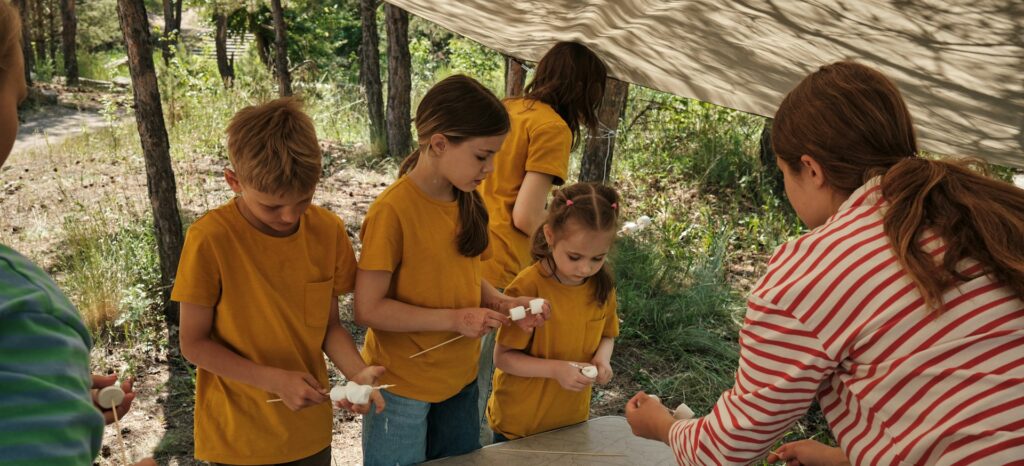
Adventure is not only about activities, it is also about people. At our venues around Leeds, York and Yarm, children meet others from different schools, neighbourhoods and backgrounds. That alone can be eye-opening, especially for children who mostly spend time with classmates or family.
Structured team games, outdoor challenges and creative projects give children a chance to practise:
- Cooperation, working together towards a shared goal
- Communication, explaining ideas and listening to others
- Leadership, sometimes taking the lead, sometimes supporting others
Quieter children often grow in confidence when they are given purposeful but manageable roles, such as timekeeper, organiser or problem-solver in the background. They see that their contribution matters, even if they are not shouting the loudest.
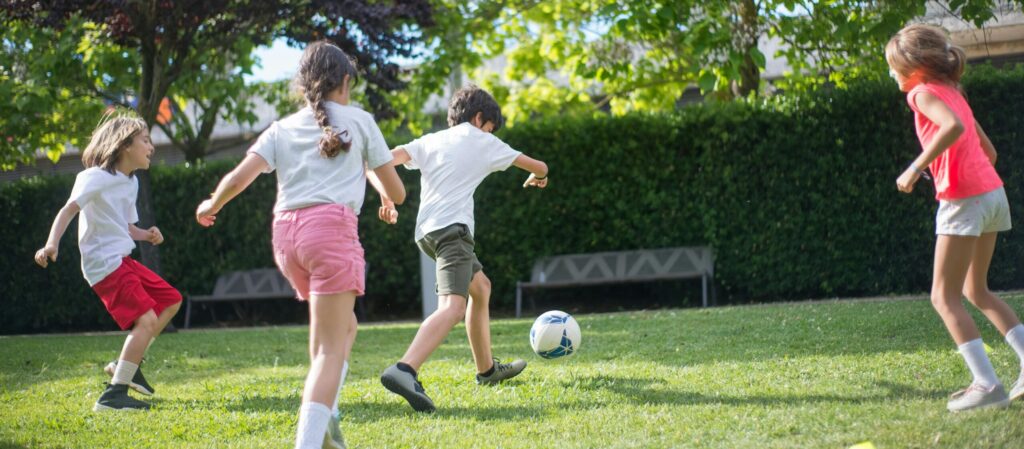
We also value unstructured play and supervised free time. This is when children might invent their own games, explore an interest more deeply, or simply chat and laugh with new friends. In these moments, they negotiate rules, solve minor disagreements and practise compromise. Those friendships can last beyond the holidays and help children feel more connected when they know they will see familiar faces at the next camp.
Safety, Structure and Support in Local Camps
Confidence only grows properly when children feel safe. Being Ofsted-registered means our activity and adventure camps follow clear standards around safeguarding, staff checks, ratios and the quality of care. Parents in Leeds, York and Yarm can feel reassured that there is a consistent framework behind the fun.
Our days follow a predictable but varied structure. Children move between physical challenges, creative sessions and calmer activities, with regular breaks and clear routines. This balance helps them feel secure, because they know broadly what to expect, while still looking forward to new experiences.
Staff play a huge role too. We know that first days can be wobbly, especially for younger children or those who are naturally anxious. Our teams are trained to spot nerves, offer gentle encouragement, and help children settle into their groups. We focus on praising effort, kindness and perseverance, not just obvious achievements.
Different programmes suit different ages. Early years sessions for 3- and 4-year-olds concentrate on play-based exploration and simple group activities. As children grow, we introduce more challenging tasks and, for older children and teens, more specialist sessions that stretch skills and independence in a carefully supported way.
Choosing and Preparing for the Right Adventure Camp
Choosing a camp can feel like a big decision, so it helps to ask a few practical questions. For families near York, Leeds or Yarm, that might include:
- Is the venue close enough to fit with our daily travel plans?
- Does the camp clearly state the age ranges for each group?
- What variety of activities are on offer across the week?
- How does the camp keep parents informed about the day?
It also helps to think about your child’s personality. Some thrive in fast-paced, high-energy sessions, others prefer imaginative play or calmer creative projects. Many enjoy a mix. A good activity and adventure camp will offer a broad programme so children can discover what suits them, while still being nudged to try something new. Look for signs of an environment that builds confidence: warm staff interaction, inclusive activities, clear behaviour expectations and plenty of encouragement without pressure. Returning to the same camp each school holiday can be especially powerful, as children build familiarity, friendships and a sense of progress over time.
Preparation makes a real difference to first day nerves. You might:
- Look together at photos of the venue and activities
- Talk through what a typical day might involve, from drop-off to pick-up
- Let your child help choose their packed lunch and label their kit
- Ask which activity they are most excited or curious to try
On the first morning, staying calm and upbeat helps. Keeping goodbyes confident and brief, then trusting staff to handle any wobbles, usually works better than long, emotional farewells. Afterwards, specific questions help children reflect on their growth. Instead of “Did you have a good day?”, try “What made you laugh today?”, “What did you find tricky?” or “What would you like to try next time?” This reinforces their new skills and reminds them of what they have already achieved.
Give Your Child the Confidence to Explore More
Adventure has a special way of drawing out strengths that children did not know they had. In and around Leeds, York and Yarm, well-planned activity and adventure camps can play a powerful role alongside family life and school, helping children build self-belief, resilience, social ease and independence.
When we see holiday camps as more than childcare, they become a meaningful investment in our children’s long-term confidence and happiness. Each new challenge, whether it is joining a group game, climbing a little higher or speaking up in a discussion, is a step towards a stronger sense of “I can do this.” With the right support, even small adventures can show children just how capable they really are.
Give Your Child A Confidence-Boosting Adventure
Explore our carefully designed activity and adventure camps and give your child the chance to build new skills, friendships and resilience in a safe, supportive environment. At Adventure Camps, we tailor every experience to different ages and abilities so each child is challenged at the right level. If you have any questions or would like to discuss specific needs, simply contact us and we will be happy to help you choose the ideal camp.