Spring Into Confidence: Why Adventure Skills Matter
Spring brings longer days, lighter layers, and the first real chance for children to spend more time outdoors after winter. It is a natural moment for them to stretch their legs, try new things and shake off a bit of indoor restlessness. When children have structured opportunities to learn practical adventure skills at this time of year, they are not just burning energy; they are building foundations that will support them long into the future.
At Adventure Camps, we see how adventure-based learning helps children aged 3 to 16 grow in confidence, independence and resilience. Climbing over a low obstacle, working out how to cross a pretend river or reading a simple route are not just games. They are stepping stones to problem-solving, self-belief and calm thinking under pressure. Because our camps are Ofsted-registered and based in premium school venues across the UK, we can offer that sense of freedom within an environment where safety, wellbeing and learning sit side by side.
Navigating the Great Outdoors with Curiosity
Learning how to find your way outside is a powerful life skill. Spring is an ideal season to start practising. The weather is usually mild enough to explore for longer. Changes in plants, light and wildlife give children lots of clues to notice and talk about. The key is to keep things age-appropriate so children feel successful, not overwhelmed.
For younger children, simple navigation might mean following coloured flags around a field, spotting picture markers tied to trees or remembering to stay within easy sight of a base point. They can learn to walk from one clear landmark to another, such as a bench or a set of cones. They can do this while talking about what they see and hear. Older children can start to read very simple maps of the school grounds, follow an arrowed route or match symbols to real-life features, like a sports pitch or a line of trees.
Through this kind of adventure-based learning, navigation turns into hands-on discovery rather than something taught on a whiteboard. Children begin to:
- Notice landmarks and use them as reference points
- Pay attention to changing weather and light
- Plan short routes and adjust them with adult guidance
- Think ahead about where they are going and how to get back
All of this can be done safely within gardens or carefully chosen nearby outdoor spaces, with clear boundaries and close supervision. Children feel as if they are exploring something new, while parents can be confident that qualified adults are keeping a close, supportive eye on them.
Building Teamwork Through Outdoor Challenges
Teamwork matters everywhere, from the classroom to the sports pitch and, later, the workplace. Outdoor challenges provide a fun, low-pressure way for children to learn how to cooperate, share ideas and listen to different opinions. The fresh air and open space help children relax. This often makes it easier for them to speak up and join in.
At our camps, we see how simple collaborative activities turn a group of children into a supportive team. These might include:
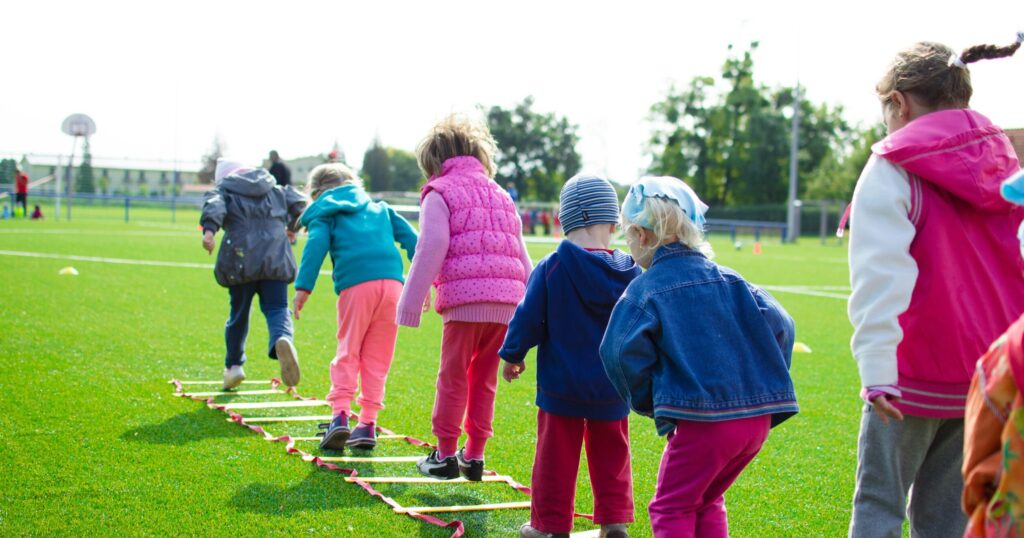
- Team obstacle courses where children help each other across, under or through equipment
- Group problem-solving games such as transporting a ball using only certain props
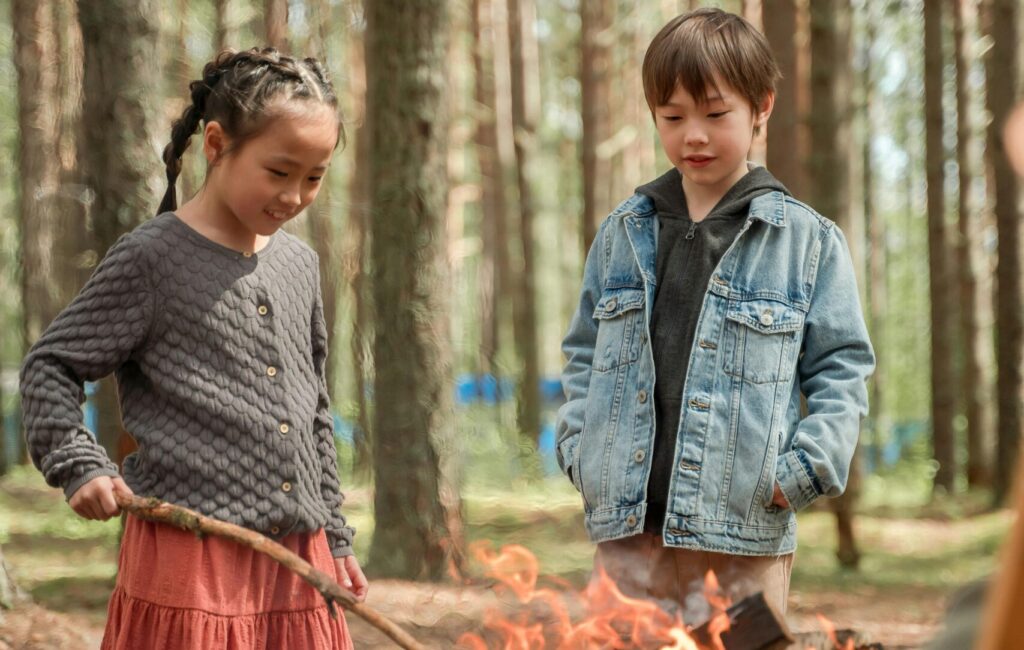
- Construction tasks like building dens or shelters from natural or provided materials
While they are busy with these challenges, children practise taking turns, explaining their ideas and noticing when someone in the group might need help. Natural leaders have a chance to guide positively, and quieter children can discover that their suggestions are valued. Staff structure tasks so there is a role for everyone, and adjust the difficulty to suit different ages and abilities. Therefore, each child can feel involved rather than left behind.
Because Adventure Camps is Ofsted-registered, parents can be assured that safety and wellbeing are always at the centre. Activities are thoughtfully planned, with risk assessments, clear rules and warm, approachable staff who are trained to support both physical safety and emotional confidence.
Developing Practical Outdoor Safety Sense
Children cannot develop independence without learning how to keep themselves safe. The outdoors offers countless opportunities to practise this with guidance. Instead of simply telling children what not to do, adventure-based learning invites them to think about why certain choices are safer or more sensible, all within a controlled setting.
Outdoor safety skills begin with simple ideas such as:
- Understanding personal space and not crowding or pushing others
- Staying within agreed boundaries, like a marked field or path
- Recognising who the safe adults are and how to ask for help
- Listening carefully to instructions before starting an activity
Camp leaders weave safety messages into games and challenges, so children absorb them naturally. For example, before a running game, staff might ask children to spot possible trip hazards and suggest how to move around them. When exploring a nature area, adults can encourage children to think about which plants are safe to touch and which should only be looked at.
The aim is to give children freedom to make choices and learn from experience, in an environment that’s closely supervised. Over time, children begin to pause, assess simple risks and make better decisions without needing constant adult reminders.
Discovering Nature Through Hands-on Exploration
Spring is full of small wonders, from new leaves and blossom to birdsong and insects emerging in the sunshine. When children are given time to slow down and pay attention, their curiosity about nature grows quickly. Outdoor exploration can be gentle and reflective or energetic and playful, depending on the group and the setting.
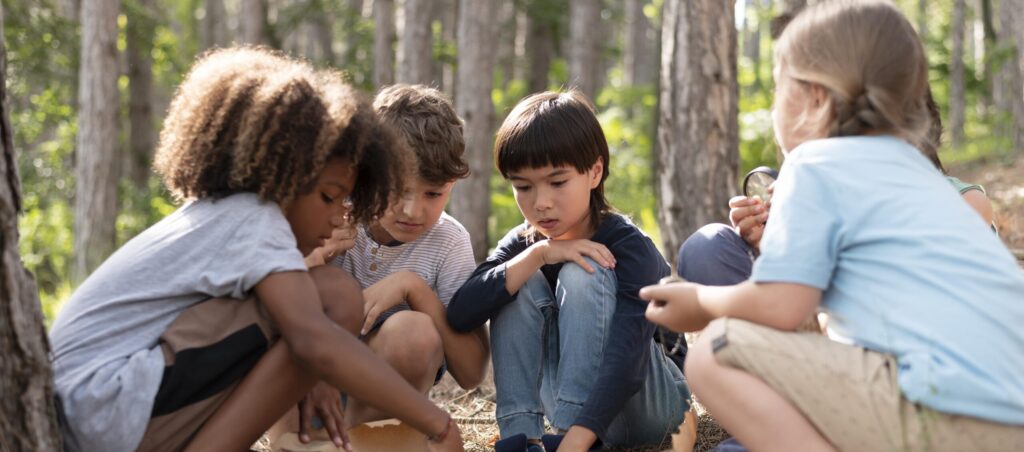
Guided activities might include mini nature trails, where children look for specific colours, shapes or textures, and sensory games that invite them to feel tree bark, listen for different sounds or notice the smell of damp soil. Creative tasks, such as making art from fallen leaves and twigs or building tiny habitats, help them feel connected to the world around them.
These hands-on experiences quietly support learning in areas like science and geography. Children begin to:
- Recognise seasonal changes and talk about why they happen
- Spot simple patterns in weather, light and plant growth
- Ask questions and share their own explanations
Time in nature also supports wellbeing. Many children feel calmer and more present when they are outdoors, moving their bodies and focusing on real-world sights and sounds instead of screens. At Adventure Camps, we see how this blend of physical activity and mindful observation can lift moods and build a long-lasting appreciation for the environment.
Creative Problem-Solving with Adventure Challenges
Problem-solving is at the heart of adventure-based learning. When children are given practical puzzles that feel like play, they learn to plan, test ideas and adapt when things do not quite work. Spring, with its mix of cool breezes and soft ground, offers lots of scope for creative outdoor tasks that feel fresh and different.
Activities can range from simple scavenger hunts, where younger children look for items that match a colour or texture, to more structured survival-style challenges for older groups. For instance, children might be asked to work out how to transport water without spilling it, or to create a route across an imaginary swamp using only a few pieces of equipment.
These challenges are always tailored to age and stage. Younger children might act out imaginative stories, such as rescuing a toy animal from a pretend river, while older children tackle more complex puzzles that require planning, negotiation and compromise. Throughout, staff encourage a growth mindset, praising effort, creative thinking and perseverance rather than just the final result.
Over time, children start to see that setbacks are part of learning. If a den collapses, they can laugh, talk about what went wrong and try a different design. If a team plan does not succeed straight away, they can adjust their approach. These are skills that transfer easily back to schoolwork, friendships and everyday life.
Helping Your Child Take Their Next Spring Adventure
When we bring all these elements together, a clear picture appears. Navigation skills build awareness and independence. Team challenges grow communication, empathy and shared responsibility. Safety sense helps children make sensible choices outdoors. Nature exploration feeds curiosity and calm, and problem-solving tasks strengthen resilience and flexible thinking.
At Adventure Camps, we design our Ofsted-registered holiday camps so that children can gain these benefits within a structured, caring environment. Parents can support this learning by asking open questions after camp, such as, “What new skill did you try today?” or “How did your team solve that challenge?”. Simple family activities, like following a short local trail, building a garden den or going on a mini nature hunt, can keep new skills alive between camp days. With gentle encouragement and regular chances to explore, children can step into spring ready to grow in confidence, adventure and joy.
Give Your Students Real-World Confidence Through Adventure
At Adventure Camps, we use adventure-based learning to help young people grow in resilience, teamwork and self-belief. If you are looking to enrich your curriculum with meaningful outdoor experiences, we would love to work with you to shape a programme that fits your group. If you have any questions or are ready to explore dates and options, simply contact us and we will guide you through the next steps.