Why the Great Outdoors Is a Child’s Best Classroom
Outdoor play is one of the most powerful ways children learn about themselves, other people, and the world around them. When children have space to move, climb, explore, and create, they are not just letting off steam; they are building the foundations of healthy development.
Many families notice that childhood often involves more screens and less green space than it once did. That shift matters, because the benefits of outdoor play touch every part of a child’s growth, from strong bodies and calm minds to confident decision-making and rich imagination. Adventure-based learning brings all of this together, blending play, exploration, and structured challenges into experiences that feel exciting, but are carefully designed as child development activities.
At Adventure Camps, we see this every school holiday at our Ofsted-registered venues in and around Leeds, York, Yarm and Cambridge. Our multi-activity programmes, Explorers sessions for younger children, and Survival Camp for older adventurers show how time outside can become a powerful classroom in its own right.
Building Strong Bodies Through Active Outdoor Play
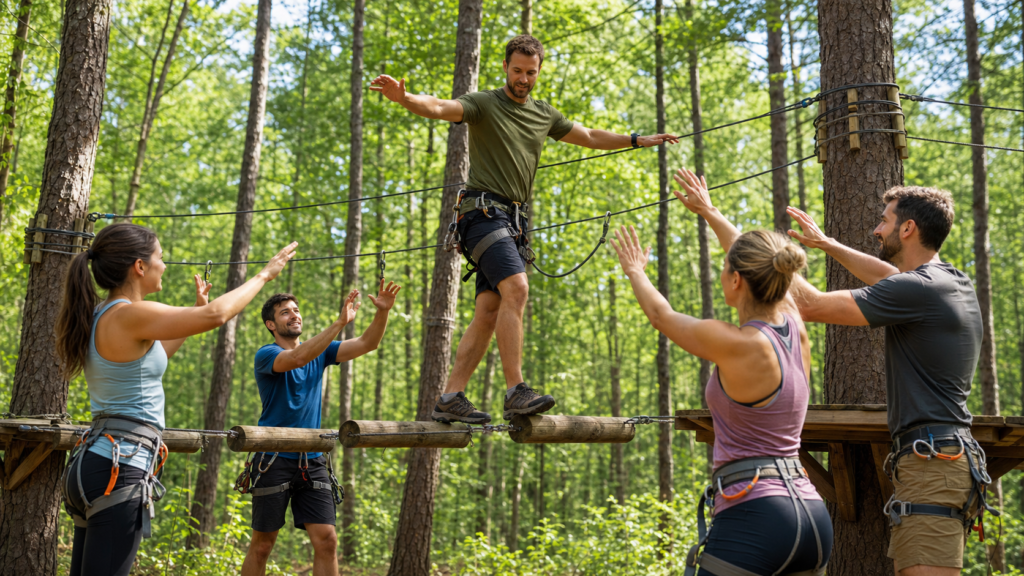
Outdoor play gives children the space to move in bigger, more natural ways than most indoor settings ever can. Running across fields, scrambling over logs, balancing on beams or climbing on play equipment all strengthen muscles, improve coordination and develop balance and agility.
Varied outdoor environments make a real difference. Grass, mud, sand, woodland paths and playground surfaces all ask children to move slightly differently. As they jump over puddles, grip climbing holds or carry sticks and equipment, they are constantly training both gross motor skills, like running and jumping, and fine motor skills, like gripping, tying and threading.
Regular outdoor activities for children also help set healthy routines. Energetic movement supports better sleep, more stable energy levels and can reduce the risk of weight-related health issues. When active play feels enjoyable and social, children are more likely to see movement as a natural part of everyday life rather than a chore.
Different ages gain different things from these experiences. For example:
- Early-years children might enjoy simple chasing games, nature hunts and low-level climbing.
- Primary-aged children may be ready for team games, mini obstacle courses and basic sports skills.
- Older children often thrive on more demanding challenges, like longer team games, fitness circuits or multi-part obstacle challenges.
Our multi-activity programmes and Explorers sessions are built with this variety in mind. We structure days so children can try new movements safely, build confidence in their physical abilities and experience that satisfying tiredness that comes from genuine outdoor adventure.
Growing Confident, Independent Thinkers Outside
Outdoor play is an ideal setting for children to make real decisions. Do they go left or right along a path? How do they cross a stream without getting soaked? Which teammate should carry which piece of equipment? Every choice requires quick thinking, weighing up options and learning from what happens next.
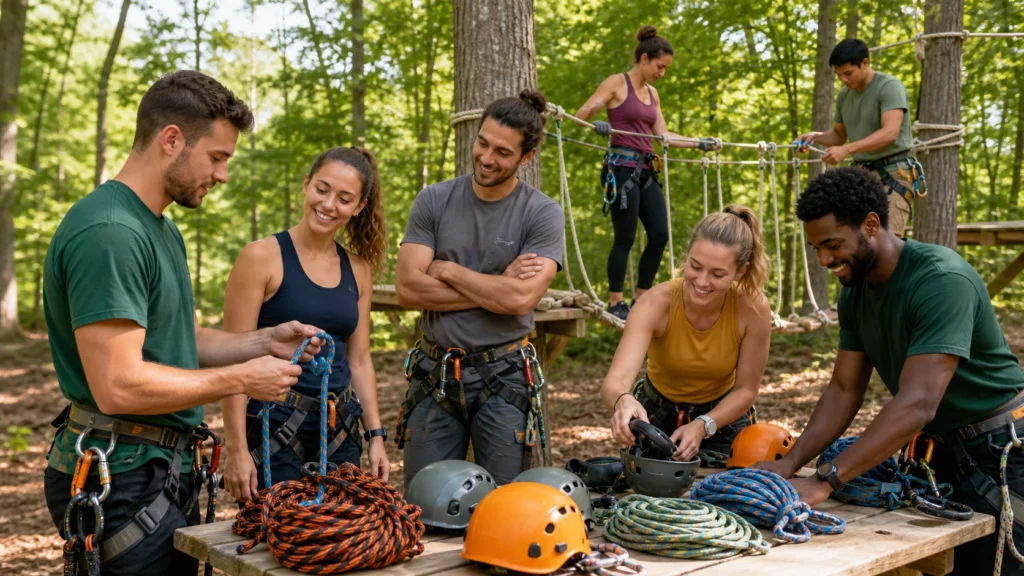
This is where the idea of positive risk comes in. Positive risk is not about danger, it is about carefully managed challenges that feel exciting but include clear boundaries and support. When children climb a little higher, navigate new ground or try an unfamiliar activity with encouragement nearby, they learn that they are capable of more than they first thought. Each small success builds resilience and self-belief.
Adventure-based learning takes this natural process and gives it structure. Children learn by doing, not just by listening. They read the environment, try a strategy, discover that it might not work perfectly, then adjust and try again. Over time, they become more comfortable with trial and error and more willing to take on new challenges.
You can see this in activities like:
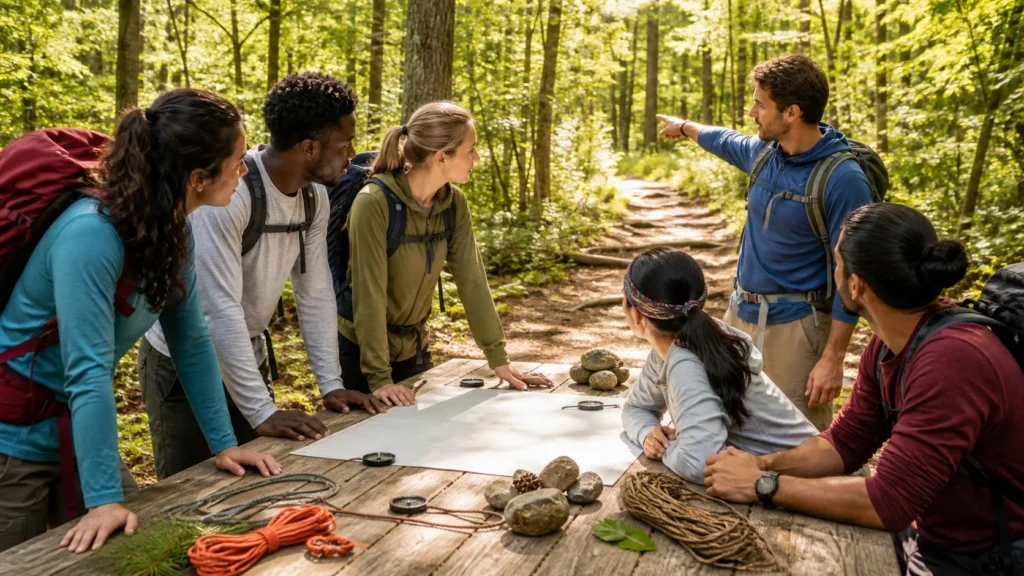
- Orienteering sessions where children use simple maps or clues to find checkpoints.
- Team problem-solving games that require planning, communication and shared responsibility.
- Exploring new outdoor spaces where children help decide routes and agree ground rules.
In our Explorers sessions and Survival Camp, we design experiences where children take real ownership. They might help plan a route, suggest how the team should share tasks or decide on the best way to solve a challenge, all while supported by experienced staff. These moments are where leadership skills begin to grow.
Social Skills, Teamwork and Emotional Wellbeing Outdoors
When children play outside together, social skills develop in very natural ways. In unstructured play, they negotiate rules, decide who goes first, sort out disagreements and adapt games so everyone can join in. In doing so, they practise cooperation, compromise and empathy.
Structured outdoor challenges then build on this. Working in small teams to complete an activity encourages children to:
- Listen to others’ ideas.
- Share their own thoughts clearly.
- Take turns leading and following.
- Respect different strengths within the group.
These skills connect closely with emotional wellbeing. Being outside in fresh air, with space to move and explore, often helps reduce stress and improve mood. Many children find it easier to talk, calm down or reset after a tricky moment when they are outdoors rather than in a confined indoor space.
Adventure-based learning naturally encourages children to support each other. When a friend feels nervous about an activity, encouragement from peers can be incredibly powerful. When a team succeeds, they share that sense of achievement. When things do not go to plan, they learn to manage frustration, try again and recognise that mistakes are part of learning.
Our group-based child development activities at Adventure Camps are designed to build friendships and a sense of belonging. Survival Camp is a good example, with team-focused outdoor adventures that depend on cooperation and shared effort, not just individual performance.
Creativity, Curiosity and a Lifelong Love of Nature
Outdoor spaces are wonderfully open-ended. A stick can become a magic wand, a fishing rod or part of a shelter. A fallen tree can be a pirate ship one minute and a balance beam the next. This kind of flexible play supports creativity in a way that many fixed, manufactured toys cannot match.
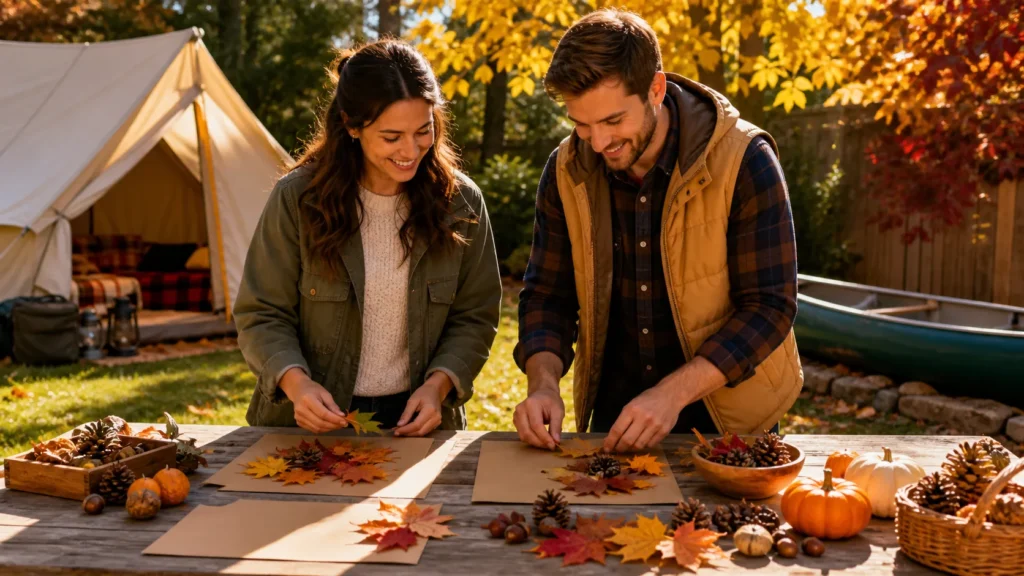
Nature also offers rich sensory experiences. Children feel the wind on their faces, notice the smell of wet leaves, hear birds and insects, and explore different textures like bark, stones and grass. These sensations are powerful fuel for curiosity and observation.
Outdoor exploration naturally leads into early STEM-style thinking. Children might notice patterns in leaves, test how different materials behave in water, or ask why a particular area is muddy while another is dry. They begin forming simple theories and testing them through play.
Adventure-based learning taps into this curiosity by inviting children to:
- Build simple shelters and see what makes them stable.
- Plan basic routes and compare different options.
- Invent new games using natural materials and open space.
- Adapt plans quickly when the environment or conditions change.
Our Explorers programmes are particularly focused on helping younger children develop a sense of wonder about the natural world. When children feel connected to nature early on, they are more likely to value and care for it as they grow.
Choosing the Right Outdoor Experiences for Your Child
When parents look for outdoor activities for children, it helps to know what to prioritise. Some useful questions to consider include:
- Are safety procedures clear and age appropriate?
- Are staff experienced and trained to work with children of different ages?
- Are activities adapted so everyone can take part, regardless of ability or confidence?
- Is there a balance between structure and free play?
For many families, Ofsted-registered childcare brings welcome peace of mind, especially during school holidays when work and family schedules must align. Knowing that activities are designed with both safety and development in mind allows parents to relax and children to make the most of their time outside.
Even with busy routines or urban surroundings, there are simple ways to weave the benefits of outdoor play into family life. Short walks, trips to local parks, bug hunts, scooter rides or weekend nature trails all count. The key is consistency and giving children some freedom to explore, within clear boundaries.
Structured holiday camps can sit alongside this family time, offering richer adventure-based learning than might always be possible at home. At Adventure Camps, we see Explorers as a gentle way for younger children to gain confidence outdoors, while Survival Camp offers older children a more immersive, skills-based outdoor experience that stretches their abilities.
Turn Today’s Play Into Tomorrow’s Life Skills
Outdoor play is not a bonus extra, it is a powerful driver of child development. The movement, fresh air, and challenge of real-world environments shape strong, healthy bodies. The problem-solving, decision-making and positive risk-taking develop confident, independent thinkers. The cooperation, shared success and support between children build social skills and emotional resilience. Along the way, creativity and curiosity flourish.
When we treat outdoor time and adventure-based learning as essentials rather than nice-to-haves, we help children grow into capable, adaptable young people who feel at home in the natural world. At Adventure Camps, we see this progress every day, whether it is a younger child finding their feet in Explorers or an older child taking on new challenges at Survival Camp.
Choosing even one new outdoor activity for your child this school holiday could be the start of a lasting love of adventure and nature. Over time, those moments of play add up to life skills that stay with them far beyond childhood.
Bring Adventure-Based Learning To Your Group
Give your pupils the chance to grow in confidence, teamwork and resilience through our carefully designed adventure-based learning programmes. At Adventure Camps, we tailor each experience to your group’s age, goals and abilities so every activity has clear learning outcomes. If you would like to talk through dates, logistics or specific curriculum links, simply contact us and we will help you plan the ideal programme.