From Homework Battles to Real-World Adventures
Homework evenings can feel heavy. Children come home tired, everyone is hungry, and there is a pile of worksheets waiting on the table. Parents are trying to cook, answer emails, and check spellings, while children are trying to remember what on earth the maths method used was. By the middle of the autumn term, the calm start of the year can turn into a nightly struggle.
Many families begin to wonder if there is a better way for children to keep learning outside the classroom. That is where adventure-based learning comes in. It can build the same skills schools care about, but through hands-on challenges that feel exciting instead of draining. At Adventure Camps, we see every holiday that structured, Ofsted-registered activities can support learning without adding to the evening pressure.
So as this school year settles in, it is a good time to ask a bold question: could adventure-based learning replace some traditional homework and still help children thrive?
What Traditional Homework Gets Right and Wrong
Homework is not all bad. It is meant to:
- Give children extra practice in reading, writing and maths
- Help them build discipline and independence
- Keep parents involved in what is happening at school
- Reinforce new ideas before they are forgotten
When it works well, homework can give children a sense of progress. A short reading book or a quick set of number facts can support what they did in class that day.
But many parents notice the downsides by the first school break. After a long day at school, children are simply exhausted. Long tasks in the evening can mean:
- Less relaxed family time
- More arguments and tears over mistakes
- Growing anxiety around tests and grades
- Endless sitting when their bodies need to move
Traditional homework can also widen gaps. Children who have calm spaces to work, adults who can help and plenty of resources often cope better. Those without that support can feel left behind, even if they are just as bright.
On top of that, not all children learn best by writing on paper. Some are visual, some are physical, some need to talk things through. For younger children, especially those aged 3 to 11, long periods sitting still go against how their brains and bodies are wired. They are built for play, movement and discovery. When most learning at home is desk-based, we miss a big chance to teach through the way they naturally develop.
How Adventure-Based Learning Actually Works
Adventure-based learning is not just letting children run wild outside. It is planned, purposeful activity that uses challenge, play and exploration to build skills in real settings. There is plenty of fun, but there is also structure behind it.
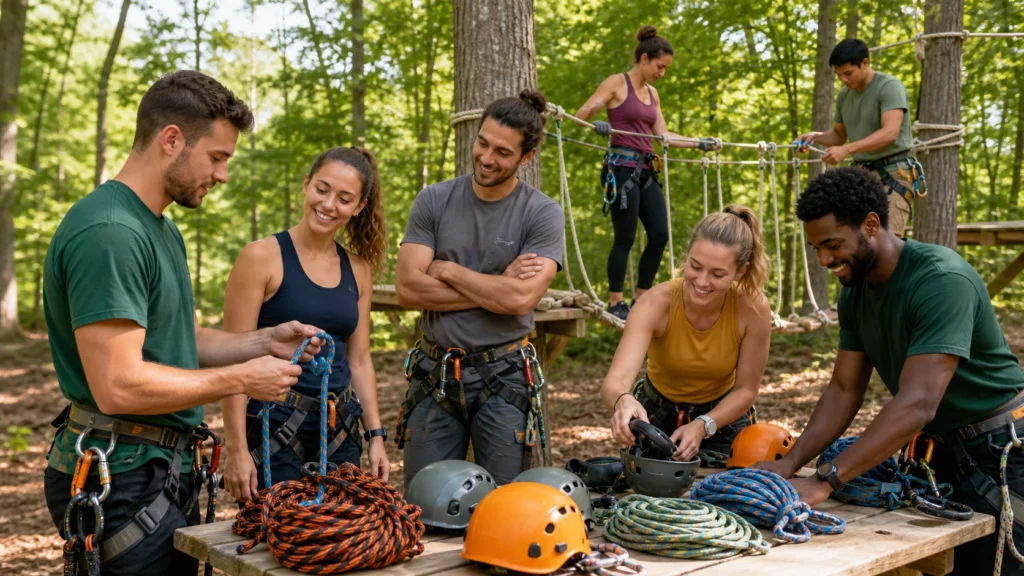
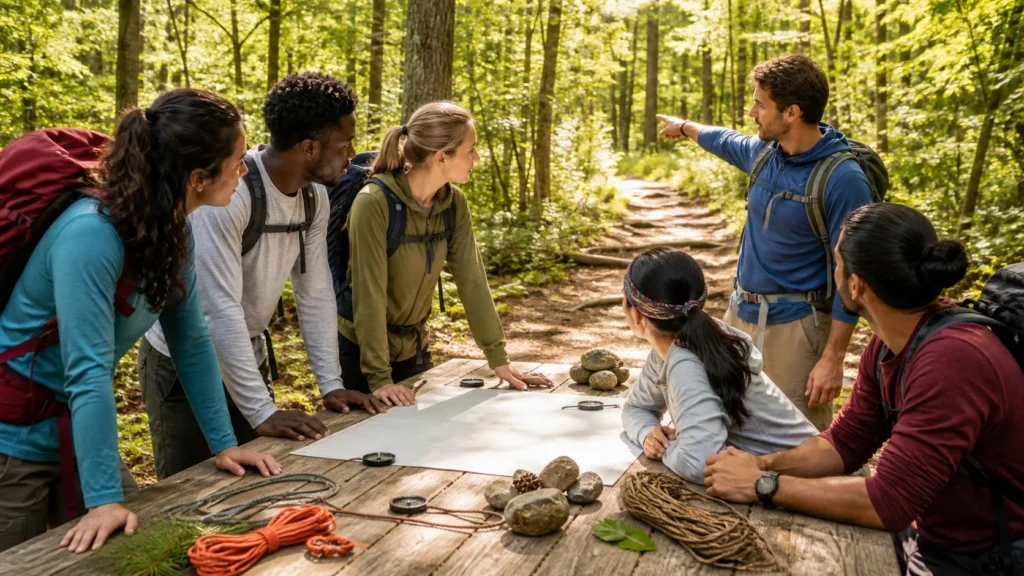
A day at an adventure-based holiday camp might include:
- Orienteering with maps and compasses
- Bushcraft skills like building shelters
- Team games and problem-solving challenges
- Creative activities like den building or simple engineering tasks
Within those activities, we can weave in all kinds of learning. For example:
- Literacy: reading instructions for a challenge, writing a simple plan, sharing ideas clearly with a group
- Numeracy: timing races, counting scores, measuring distances, estimating how many materials are needed for a task
- Teamwork: listening to others, taking turns to lead, resolving disagreements
- Problem-solving: trying different approaches, thinking ahead, reflecting on what worked and what did not
This style of learning links naturally to what children are asked to do in the classroom, such as following multi-step instructions, explaining their thinking and applying maths in context. The difference is that the learning has a clear purpose children can see and feel.
At Adventure Camps, safety and inclusion sit at the heart of this. Being Ofsted-registered means we follow clear standards and put careful planning into every day. Activities are adapted for different ages and abilities so that children from 3 right through to 16 can join in, feel safe, and be stretched at the right level. It is not just playing outside; it is structured experiential education that looks a lot like play from the child’s point of view.
Could Camps Replace Homework for Real Learning Gains
So, can a day spent solving outdoor challenges really do the job of a page of sums or a comprehension sheet? In many cases, it can do as much, and sometimes more.
Think about what schools want from homework. They want children who can:
- Concentrate for a period of time
- Stick with something when it is tricky
- Think carefully and check their work
- Remember what they have learned
A team challenge where children have to cross an area using limited equipment calls on all these skills. They must plan, listen, focus, and try again when their first idea does not work. The experience is often more memorable than a worksheet, which can mean the learning sticks for longer.
Adventure-based learning can also unlock confidence. A child who struggles with written maths might come alive when asked to:
- Work out how much rope is needed to complete an obstacle
- Count and record scores during a team game
- Plan a simple camp recipe using quantities and timing
They are still doing maths, but in a way that makes sense to them. This can reduce the feeling of failure they might get from repeated difficult homework tasks.
We are not saying that all formal practice should disappear. Children still need to read regularly and sometimes sit down to work quietly. But if they are having rich, adventure-based experiences during holidays and some weekends, schools and families may find they do not need quite so many worksheets to see progress.
School Holidays as the New Learning Frontier
Term-time evenings are busy. That is why school holidays are such a powerful chance to top up learning without adding pressure to weekday nights. Instead of extra homework packs, children can use their break to learn in different ways.
Multi-activity and specialist holiday programmes can:
- Keep brains active through problem-solving and creativity
- Maintain social skills and routines
- Support physical health through movement and outdoor play
- Protect against that sluggish feeling when children return to school
For working parents, there is another big plus. Quality day camps provide safe, reliable childcare while children are doing something meaningful, not just filling time. At Adventure Camps, our locations in and around Leeds, York, Yarm and Cambridge use local parks, woodlands and sports areas as outdoor classrooms. These spaces are perfect for exploring science, geography and physical education through real-life situations.
A stream can become a mini science lab. A map of the local area turns into a geography lesson. A team sport is a chance to practise communication and fairness. It all counts as learning, but it feels like adventure.
Rethinking Your Child’s Learning This School Year
So where does this leave homework? It does not have to be an all-or-nothing choice. Families can design a mix that feels healthier.
A simple reflection can help:
- When does homework time feel calm and helpful?
- When does it cause stress, tears or late nights?
- Could some of that time be swapped for active, practical learning?
A blended approach might mean keeping key school tasks like reading, but being more flexible with extra practice sheets. Some of that time could be replaced with weekend walks that include simple challenges, or regular holiday camps that offer rich adventure-based learning.
At Adventure Camps, we see children grow in confidence, independence and social skills through this style of activity. They often return to school more settled and ready to learn, which can make whatever homework they do have feel less overwhelming.
What if the most powerful homework your child does this year is not another worksheet, but climbing, creating, exploring and problem-solving in real life?
Help Your Young People Grow Through Real-World Challenges
If you are ready to turn outdoor experiences into meaningful skills, our adventure-based learning programmes are designed to support you. At Adventure Camps, we work closely with schools and groups to tailor activities that build confidence, teamwork and resilience. Tell us about your goals and we will recommend the most suitable options for your learners. To discuss dates, logistics or a bespoke programme, simply contact us.