Finding the Right Summer Camp Fit for Your Child
Choosing camps for children with additional needs can feel like a lot. You might be trying to balance work, school holidays, siblings and transport, all while wanting your child to feel safe and happy. It is no wonder many parents and carers feel unsure about where to start or what to ask.
A well-chosen camp can make a huge difference. It can give your child structured fun, new friends, fresh air and time away from screens. It can also give families a breather, knowing their child is in safe hands. When a camp is truly inclusive, children can build confidence, practise social skills and try things they might not get to do at school.
In this guide we share clear, practical questions you can ask any provider of camps for children with additional needs, including teams like ours. The aim is not to catch anyone out. It is to help you work out whether a setting is genuinely ready to support your child, not just in a brochure, but in real life.
Understanding Your Child’s Needs Before You Book
Before you start looking at camp websites or leaflets, it helps to pause and think about your child. You know them best. Taking time to notice what they enjoy and what they find hard will make your search much easier.
You could ask yourself things like:
- What helps my child feel calm and settled?
- What usually upsets them or leads to a wobble?
- Do they like busy group games or smaller, quieter activities?
- How do they handle changes to routine?
It can also help to include your child in these chats in a simple way. You might ask what sounds fun to them. Some children will choose outdoor play and sports, others prefer arts, crafts or drama. Some want to try everything, some need more predictable, low-pressure options.
Try creating a short “camp profile” that you can share with different providers. For example:
- Key strengths and interests
- Sensory likes and dislikes, such as noise, touch or crowds
- Any medical, dietary or personal care needs
- Triggers and early signs of distress
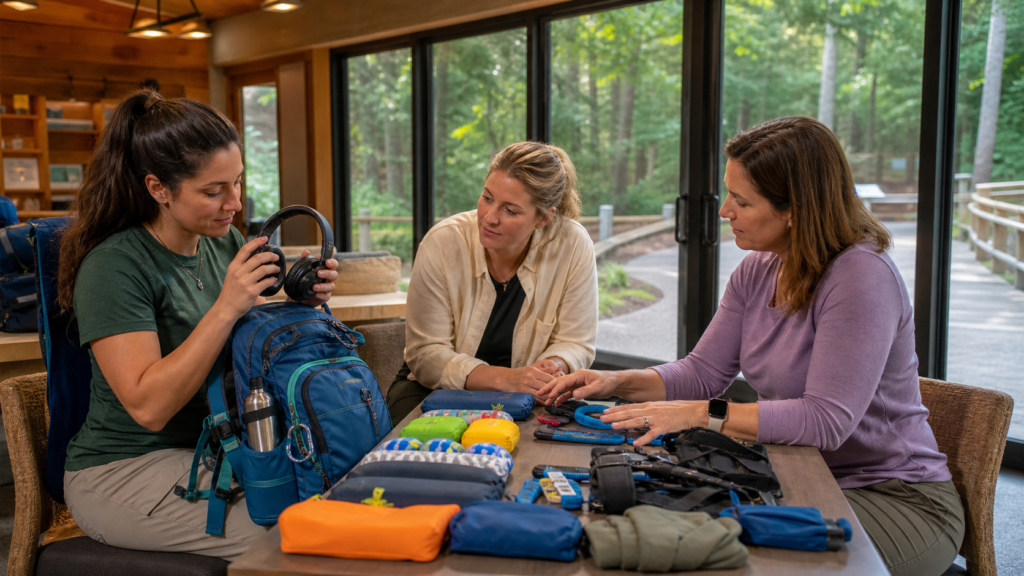
- What usually helps, such as a quiet space, headphones or a certain script
Having this written down saves you repeating yourself and makes it easier to spot which camps for children with additional needs are more likely to be a good fit.
Key Safety and Staffing Questions to Ask Camp Providers
Once you start talking to providers, safety and staffing are a good place to begin. Ofsted registration is an important baseline. It means the camp is inspected and must follow rules around safeguarding, staff checks and general childcare standards.
You can then ask more detailed questions like:
- What are your staff to child ratios for different age groups?
- How many staff have training or experience with SEND?
- Who is the named person for safeguarding on site?
- How do you manage medication, including storage and record keeping?
- What is your process for personal care, such as toileting or changing?
- What happens in an emergency or if a child goes missing?
It is helpful to go beyond yes or no answers. You might say, “Can you give an example of how you have supported a child with similar needs before?” or “How would you handle it if my child found the noise of a group game overwhelming?”
Good signs to look for include:
- Clear, confident answers, not rushed or defensive ones
- Staff who talk about individual risk assessments for specific activities
- Openness about when they would need extra support or cannot safely meet a need
If a camp is honest about limits, that can still be a positive thing. It shows they are thinking carefully about safety, not just trying to fill places.
Inclusion, Communication and Everyday Support at Camp
Safety is the starting point, but everyday inclusion is what your child will feel the most. Ask how the camp adapts activities, routines and spaces for children with additional needs. For example:
- Do you have quiet or low-stimulus areas available throughout the day?
- Can children step out of an activity and rejoin later without pressure?
- Do you use visual timetables, now and next boards or clear picture labels?
- How do you manage transitions between activities, indoors and outdoors, or meal times?
Communication with families is another big part of this. Helpful questions might be:
- How will you share updates with me each day?
- Who should I speak to at drop-off and pick-up?
- How do you prefer to receive detailed information about my child?
- What happens if a strategy we planned together is not working?
Social inclusion matters just as much as access to activities. You could ask:
- How do you support children who find it hard to join in games?
- What do you do to prevent children from being left out or teased?
- How are staff trained to handle conflict or anxious behaviour?
You want to hear about children being actively included in group life, not quietly “parked” on the side with separate tasks unless that is something they have clearly chosen.
Touring Camps and Reading Between the Lines
If you can, visiting a campsite before you book is very helpful. Some providers run open days, others may offer a tour during a normal camp day so you can see things in action.
On a tour, notice:
- How staff speak to children and to each other
- Whether children look relaxed, busy and engaged
- Noise levels in main spaces and whether there are calm corners
- How easy it would be for your child to move around the site
- The layout of toilets and changing areas, and whether doors and signage are clear
You might also look for simple visual supports, such as picture labels or colour-coded areas. These small details often show a setting is used to thinking about different needs.
If you happen to meet other parents or carers on site, you can ask gentle, open questions like, “How has your child found it here?” or “How are staff with communication?” You are not looking for perfect answers, just a sense of honesty.
Be wary of very vague promises such as, “We can handle anything,” without clear examples. Good providers of camps for children with additional needs tend to be specific. They might say what they can adapt easily, what they would need extra time to plan for and what they cannot safely offer.
Making a Confident Choice for This Summer and Beyond
Choosing the right camp is about fit, not perfection. The key is feeling that staff listen to you, respect your knowledge of your child and are ready to work with you. If something does not feel right, it is OK to keep asking questions or explore other settings.
Many families in areas like Leeds, York, Yarm and Cambridge find it helpful to start these conversations early in the year. This gives camp teams time to think about reasonable adjustments, plan staffing and talk through any worries before the busy holiday period.
Providers like Adventure Camps aim to offer safe, inclusive childcare where children aged 3 to 16 can try new things, build confidence and have fun. With a clear set of questions and a simple camp profile for your child, you can compare different options and choose the one that feels most aligned with their needs.
The goal is for your child to come home tired, happy and proud of what they have done, and for you to feel calm knowing you made a careful, informed choice. Over time, the right camp can become a regular, trusted part of your school holiday routine.
Give Your Child Confidence With Inclusive Outdoor Adventures
Our specialist camps for children with additional needs are designed to build confidence, independence and genuine joy in a safe, structured environment. At Adventure Camps, we work closely with families to understand each child’s abilities, triggers and interests so we can support them effectively. If you would like to talk through your child’s needs or ask specific questions, please contact us and we will help you decide the best next step.