Holiday Adventures That Grow Children’s Confidence
Life skills for children grow quickly when they have space to try, wobble and try again. Many parents notice that after a school break, their child returns to the classroom a little taller in spirit, more chatty, more sure of themselves. Often, that change has come from time spent at holiday camps, not just from staying at home.
At camp, children are placed in new situations where they must make decisions, solve problems, and work with others. This kind of learning feels like play, but it is powerful. At Adventure Camps, we run Ofsted-registered, multi-activity and specialist school holiday camps for children aged 3 to 16 across Leeds, York, Yarm and Cambridge, all built around adventure, creativity and confidence-building.
In this article, we explain why camp is such a strong setting for growing life skills for children, what those skills actually look like and how parents can pick a camp that gives their child space to grow, not just something to do during the holidays.
Why Life Skills Flourish Away From the Classroom
School is usually planned to the minute. Lessons, tests and targets shape the day. This structure is helpful for learning subjects, but it can leave less time for children to practise the everyday skills that sit around academic work, like leading a game, speaking up in a group or coping when plans change.
Holiday camps work differently. Activities are still planned and safe, but the feel is more relaxed and playful. Children can:
- Move between activities more freely
- Try things without worrying about grades
- Practice social skills with new friends
Being in a fresh space without parents close by encourages independence. Children take more responsibility for:
- Looking after their own bag, coat and water bottle
- Making simple choices, such as which activity to try
- Asking adults for help when they truly need it
They also meet new children, often of different ages. Mixed-age groups are a quiet training ground for empathy and communication, as older children learn to support younger ones and younger children watch and copy positive behaviour. Disagreements do still happen, and that is not a bad thing. With the support of trained staff, children learn to listen, share and move on, instead of letting small clashes ruin their day.
At Adventure Camps, we keep clear routines and rules so that children are safe and cared for, but we build in plenty of freedom. This balance lets them lead their own play, try new things and learn from what goes well and what does not, all inside a calm, supportive setting.
Adventure, Challenge and Everyday Resilience
Life skills for children grow fastest when there is just the right level of challenge. That might be a team game on the field, a problem-solving mission, a sports activity or a new outdoor challenge. These moments can feel exciting and a bit scary at the same time.
We see a simple confidence loop at work:
- A child feels unsure about an activity
- They decide to give it a go
- They either succeed or it does not go to plan
- They get praise for trying, not just for winning
- They feel braver to try the next thing
Because holiday camps pack many activities into each day, this loop repeats often. Each small success adds another layer of self-belief, and each small setback is a safe chance to practise coping skills.
Resilience grows in everyday moments at camp, such as:
- Losing a game but staying kind and ready for the next round
- Dealing with rain during an outdoor activity and adjusting without giving up
- Handling changes to the schedule calmly when something unexpected crops up
These experiences carry back into school and home life. A child who has practised bouncing back from a lost game at camp is a little more ready to cope with a tricky test, a new teacher or a friendship wobble. They know from experience that feeling disappointed is normal and that they can recover and try again.
Creativity, Curiosity and Real-World Confidence
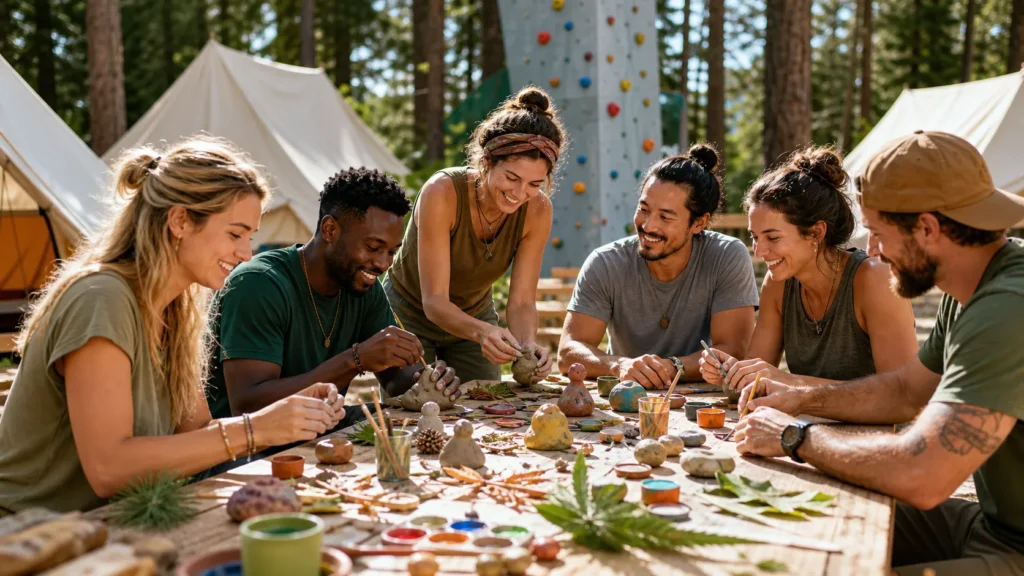
Life skills for children are not just about grit and teamwork. Creativity and curiosity also play a big part in how confident they feel in the real world. That is why we place as much value on arts, crafts, STEM activities and performance sessions as we do on sports and outdoor games.
Open-ended, hands-on activities help children:
- Think of their own ideas instead of following a script
- Solve problems using trial and error
- Take pride in projects they have planned and made
When children get to choose between different sessions, they learn to listen to their own interests. Picking an activity is a simple but powerful step in taking ownership of their time. Over repeated school holidays, this builds a sense of “I know what I like and I can choose it for myself.”
Holiday camps are also a chance to step away from screens. While technology has its place, lower-tech activities during the school break give children space to focus, create and chat without constant digital noise. Board games, group challenges, building projects and performances all encourage real conversations, shared laughter and joint problem-solving.
As children see that their ideas matter and that they can bring something unique to a group, their real-world confidence grows. They start to trust not just what they know, but who they are.
Safety, Inclusion and the Confidence to Be Themselves
For any of this growth to happen, children must feel safe and accepted. Parents need to know that their child is well looked after, and children need to know that the adults in charge are calm, kind and in control.
As an Ofsted-registered provider, we work within clear standards for safeguarding, staff training, ratios and risk assessments. This structure gives children a secure base. From that base, they can take small risks like joining a new game, trying a new activity or speaking up in group time.
Inclusive camp culture is just as important as safety rules. We pay attention to children of all ages, abilities and personalities. Some children are loud and energetic. Others are quiet or anxious in big groups. Both types, and everyone in between, deserve to feel that they belong.
We use:
- Predictable routines for drop-off, pick-up and snack times
- Group meetings that explain the day in simple steps
- Smaller or specialist sessions that suit different interests and comfort levels
When children feel seen and valued, they are more willing to share ideas, attempt new skills and be kind to others. This sense of belonging is at the heart of strong life skills for children, because it gives them the courage to practise those skills in the first place.
Choosing the Right Camp to Grow Your Child’s Life Skills
Not all holiday camps are the same, and different children need different things. When you are planning for upcoming half-term, winter or spring breaks, it helps to think about which settings will truly support your child’s growth, as well as fitting your childcare needs.
Helpful things to look for include:
- Ofsted registration and clear safeguarding policies
- A mix of activities, not just one type all day
- Friendly, trained staff who focus on encouragement
- Clear values around kindness, inclusion and confidence-building
You might also want to ask camp providers questions such as:
- How do you support shy or anxious children on their first day?
- How do you handle disagreements or unkind behaviour between children?
- How do you encourage independence while still keeping children safe and supported?
Think about your child’s personality and goals. A broad multi-activity camp can be great for children who need a gentle push to try new things and build general confidence. Specialist sessions can suit children who want to deepen a passion, like creative arts or STEM, and take on more leadership in an area they love.
At Adventure Camps, we bring together childcare, adventure and real-world skill building across our locations in Leeds, York, Yarm and Cambridge. When children head back to school after the holidays, our aim is that they return not just rested and entertained, but carrying stronger life skills, new friendships and a lasting sense of confidence in what they can do.
Help Your Child Build Confidence And Practical Life Skills
If you are ready to give your child meaningful experiences that build confidence and independence, explore how our Young Leaders programme develops essential life skills for children. At Adventure Camps we provide a supportive environment where young people learn by doing, taking on real responsibility in the outdoors. To discuss the best option for your child or ask any questions, simply contact us today.