
- What Is Adventure Cooking Camp?
- Programme Ethos
- Age Group & Expectations
- Roles & Responsibilities
- Arrival & Welcome Routine
- SKILLS & LEARNING OUTCOMES
- Safety & Hygiene (Safety section)
- Knife Safety
- Heat & Equipment Safety
- Session Delivery (How to Run a Demo)
- 13. Supporting Confidence & Independence
- 14. Behaviour Management
- 15. Tasting & Reflection
- Clean Down & End of Day Procedures
- Documents
- Allergy Action Protocols
- Dietary Variant Instructions
Adventure Cooking Camp is a hands-on holiday programme designed to build confidence, independence and practical life skills through cooking.
This page gives you everything you need to safely and confidently deliver the programme — whether it’s your first day or your fifth week.
Use this page as a reference before, during and after sessions.
What Is Adventure Cooking Camp? #
Adventure Cooking Camp is an experience-led cooking programme for children aged 8–14. Children learn real kitchen skills, explore global flavours and work collaboratively to create food they are proud of.
This is not a demonstration class. Children cook themselves, supported by trained staff in a safe, structured environment.
Key Outcomes #
- Increased confidence and independence
- Practical kitchen and food safety skills
- Teamwork and communication
- Pride in creating and sharing food
- Target Age: 8–14
- Duration: 4-day camp (Mon–Thurs)
- Hours: 8:30am–5:15pm (extended care available)
- Focus: Life skills, confidence, creativity, fun through food
Programme Ethos #
Our Delivery Mindset #
Adventure Cooking Camp is built on four core principles:
- Confidence over perfection
- Independence over speed
- Experience over outcome
- Safety above all else
Children should leave feeling proud, capable and excited to cook again.
If they leave smiling and confident, the session was a success
Age Group & Expectations #
Who You’re Working With #
- Age Range: 8–14 years
- Mixed abilities: beginners to confident home cooks
- Ratios: 1:8
Staff Expectations #
- Challenge confident children
- Support beginners
- Never compare children’s outcomes
- Praise effort, not presentation
OUR MISSION #
- Empower children to develop essential life skills through the joy of cooking
- Provide a safe, inspiring, and imaginative culinary environment
- Encourage teamwork, exploration of taste, and celebration of effort
- Every child leaves proud, with something delicious to share at home
Roles & Responsibilities #
Lead Instructor #
- Deliver safety and hygiene briefings
- Demonstrate techniques
- Manage ovens and heat
- Set session pace
Supporting Staff #
- Supervise small groups
- Reinforce safety expectations
- Encourage independence
- Support nervous cooks
Everyone is responsible for safeguarding and wellbeing.
DAILY TIMETABLE #
| Time | Activity |
|---|---|
| 08:30–09:30 | Arrival & calm activities |
| 09:30–10:00 | Kitchen safety, intro & briefing |
| 10:00–11:15 | Session 1: Savoury Dish |
| 11:15–11:30 | Break (with main camp) |
| 11:30–12:30 | Cook & Plate Savoury |
| 12:30–13:30 | Lunch (with main camp) |
| 13:30–14:45 | Session 2: Sweet Dish |
| 14:45–15:15 | Tidy Up & Discussion |
| 15:15–16:00 | Themed Food Games / Free Build |
| 16:00–17:15 | Pick-up window / Journals |
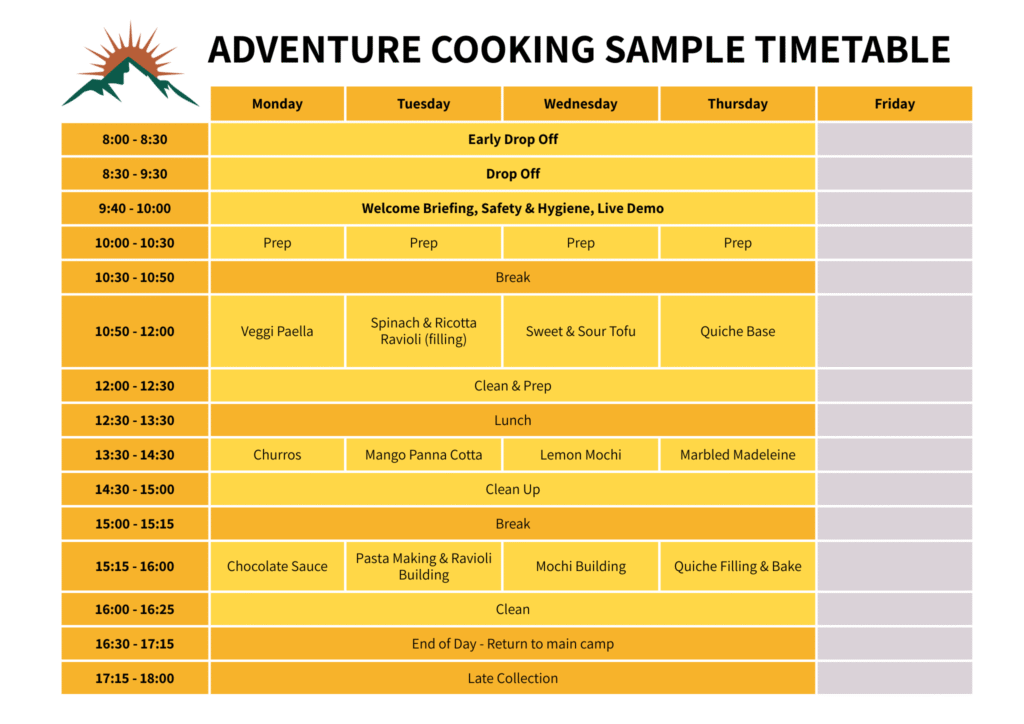
SAMPLE WEEKLY MENU #
Arrival & Welcome Routine #
The First 10 Minutes Matter #
A calm start sets the tone for the whole session.
Staff responsibilities:
- Greet children warmly
- Direct hand washing immediately
- Help children store belongings
- Introduce the day’s focus clearly
Children should feel welcomed, calm and ready to cook.
SKILLS & LEARNING OUTCOMES #
- Safe knife handling
- Measuring and weighing
- Using heat safely (hob, oven)
- Baking, grating, chopping, kneading
- Tidy-as-you-go discipline
- Team cooking and individual confidence
- Nutritional conversations
Safety & Hygiene (Safety section) #
Non-Negotiables #
- Hands washed before food handling
- Hair tied back
- Clean surfaces before and after use
- No tasting until instructed
These rules are reinforced throughout the session — not just once.
Knife Safety #
Knife Rules #
- Demonstrate grip and technique before use
- Children seated or stable when chopping
- Knives carried point-down
- Knives flat on surfaces when not in use
Unsafe behaviour = immediate stop and reset.
Heat & Equipment Safety #
Heat Management #
- Only authorised staff use ovens and hobs
- Always announce hot items
- Maintain clear hot zones
- Never rush heat-related tasks
Safety always comes before speed.
HYGIENE & SAFETY #
- Long hair tied up
- Aprons provided and worn
- Hands washed before and after each session
- Use coloured chopping boards correctly
- Heat use supervised closely
- Food stored, labelled, and sent home in containers
Session Delivery (How to Run a Demo) #
Best Practice for Demos #
- Ensure all children can see
- Explain while demonstrating
- Show once, then release children
- Keep it short and clear
Demonstrate confidence — not perfection.
13. Supporting Confidence & Independence #
Our Aim #
We want children to say:
“I made this myself.”
How to support this:
- Ask guiding questions
- Re-demonstrate instead of correcting
- Praise effort and problem-solving
Avoid doing tasks for children unless safety requires it.
14. Behaviour Management #
Kitchen Expectations #
- Calm voices
- Clear instructions
- Immediate response to unsafe behaviour
If behaviour is unsafe:
- Stop the activity
- Address calmly
- Reset expectations
Never shout across the kitchen.
15. Tasting & Reflection #
Locking in Learning #
Encourage children to:
- Taste what they’ve made
- Share positive feedback
- Reflect on skills learned
Celebration is part of the experience.
Clean Down & End of Day Procedures #
Clean Down Checklist #
- Equipment cleaned and stored
- Surfaces sanitised
- Waste disposed correctly
- Floors checked
End of Day #
- Food packed and labelled
- Issues reported to Camp Lead
- Kitchen left ready for next session
COMMUNICATION & PARENT INFO #
- Parents must send:• 2 labelled containers (1 savoury, 1 sweet)• Packed lunch (nut-free)• Refillable water bottle
- Children must wear clothes that can get messy
WOW FACTORS & MAGIC MOMENTS #
- “Chef of the Day” apron
- “Mystery Ingredient Challenge”
- “The Bake-Off Tent” vibe on Day 4
- Personalised recipe cards to take home
- Photo board of creations and chefs
- ‘Guess the Spice’ sensory challenge
FEEDBACK & EVALUATION #
- End-of-day mini reflections (What did you learn? What surprised you?)
- Written feedback slips on Day 4 (with recipe folder)
- Staff notes on participation and growth
SAFEGUARDING & MEDICAL #
- Ensure medical needs (esp. allergies) are logged and known
- No unsupervised access to hot zones
- Use of cleaning products stored securely
- Staff always in pairs for supervision
- All injuries recorded in incident log
Documents #
Allergy Action Protocols #
(Staff Mandatory Procedure)
Purpose #
These protocols explain exactly what staff must do to prevent allergic reactions and how to respond immediately and safely if one occurs.
⚠️ Allergies are non-negotiable.
If unsure at any point: STOP. CHECK. ASK THE CAMP LEAD.
1. Before the Session (Prevention) #
Daily Allergy Checks #
Before any cooking begins, the Lead Instructor must:
- Review the booking system allergy information
- Cross-check against the Weekly Allergen Matrix
- Confirm verbally with the Camp Lead which children have:
- Food allergies
- Intolerances
- Medical action plans
Kitchen Setup #
- Allergen-free ingredients prepared first or in a separate area
- Dedicated allergen-free utensils and chopping boards set out
- All substitution ingredients clearly labelled
- Kitchen Rules and Allergen Matrix displayed
2. During the Session (Control) #
Non-Negotiable Rules #
- ❌ No ingredient sharing
- ❌ No food swapping
- ❌ No tasting until instructed
- ❌ No unauthorised substitutions
Staff must actively supervise children with allergies during:
- Ingredient handling
- Cooking
- Tasting
- Packing food to take home
3. Recognising an Allergic Reaction #
Mild to Moderate Symptoms #
- Itchy skin or rash
- Sneezing or coughing
- Stomach pain or nausea
- Swelling of lips or eyes
Severe Symptoms (Anaphylaxis – Medical Emergency) #
- Difficulty breathing
- Swelling of throat or tongue
- Persistent coughing
- Dizziness or collapse
- Loss of consciousness
4. Immediate Action Procedure (If a Reaction Is Suspected) #
Step-by-Step Response #
- STOP the activity immediately
- Alert the Camp Lead
- Follow the child’s medical action plan
- Administer medication if trained and authorised
- Call emergency services (999) if symptoms are severe
- Do not leave the child alone
- Assign another staff member to supervise the rest of the group
❗ Do NOT delay action while seeking confirmation.
5. After an Incident #
The Camp Lead must:
- Record the incident using the Incident Report Form
- Inform Head Office following Adventure Camps procedures
- Inform parents/guardians as per safeguarding policy
- Review controls before continuing the session
6. Staff Responsibilities Summary #
All staff must:
- Know where allergy information is stored
- Know who the Camp Lead is
- Know where medication is kept (if applicable)
- Never guess or assume an ingredient is safe
Dietary Variant Instructions #
(How to Safely Adapt Recipes)
Purpose #
These instructions explain when and how dietary variants can be used without compromising safety, quality or consistency.
1. Supported Dietary Variants #
Adventure Cooking Camp can support the following with pre-planning:
- Vegetarian
- Vegan
- Dairy-free
- Egg-free
- Gluten-free (with controls)
❌ The programme does not support:
- Severe airborne nut allergies unless site-approved
- Multiple layered dietary needs without Head Office approval
2. Golden Rules for Dietary Variants #
- Substitutions must be approved in advance
- Never improvise substitutions on the day
- Substitutions must be listed on the Allergen Matrix
- Dedicated utensils must be used where required
- Variants should match the same learning objective
3. Gluten-Free Procedures #
- Use certified gluten-free ingredients only
- Prepare GF items:
- First, or
- In a separate clearly marked area
- Use dedicated chopping boards and utensils
- Clearly label finished items
4. Dairy-Free & Vegan Procedures #
- Use approved dairy alternatives (e.g. plant milk, vegan butter)
- Check all labels for hidden dairy or soya
- Avoid shared surfaces without cleaning
5. Egg-Free Procedures #
- Use egg-free doughs or binding alternatives where planned
- Egg-free variants must be:
- Pre-tested
- Listed on the recipe card
- Do not attempt egg-free versions of recipes where structure relies on egg unless approved
6. Labelling & Storage #
All variant food must be:
- Clearly labelled with the child’s name
- Stored separately from standard versions
- Packed separately at the end of the session
7. If a Variant Is Not Possible #
If a recipe cannot be safely adapted:
- Inform the Camp Lead immediately
- Provide an alternative task or role for the child
- Never exclude the child from the experience
8. Key Reminder for Staff #
Safety comes before creativity.
When in doubt — stop and ask.


